You're on a roof in Bridgeport. Phone buzzes, new lead. By the time you climb down, that homeowner's already booked someone else.
That's a pipeline problem, not a discipline problem. In the Chicago metro, roughly 1,000 HVAC contractors compete for the same map-pack slots and emergency searches. At that density, visibility and response speed matter more than a slightly lower hourly rate. Most jobs are gone before you schedule a consult. They die in the map pack, in the shoulder season when you stopped marketing, or in the thirty seconds after a missed call.
This post is for 1–5 truck residential shops. Eight reasons. Chicago-specific where it matters.
Quick summary
- If homeowners can't find you on Google, nothing else matters
- Paid and organic search both matter; most shops under-invest in one of them
- Referrals aren't a full pipeline, especially in shoulder season
- Going quiet in spring or slow season hands the calendar to competitors
- Wrong seasonal offer for Chicago housing stock (steam, bungalows, two-flats) costs you upsells
- Missed calls and slow callbacks lose jobs before a consult, often before a voicemail
- Web form leads go cold faster than most operators think
- Quote follow-up failure is a separate leak from the initial call
In this article
- Homeowners never find you in local search
- Paid demand goes to whoever shows up in the auction
- Word of mouth and referrals do not fill the truck alone
- You go quiet in shoulder season or slow season
- Your offer does not match the season or Chicago housing stock
- Missed calls and slow callbacks kill jobs before the consult
- Web leads and DMs go cold
- Quotes die after the estimate
- How these eight reasons stack (before the consult)
Homeowners never find you in local search
The map pack (the three pinned results at the top of any local HVAC search) is where most ready-to-book homeowners click. Not in it? You don't exist to them.
Roughly 259 licensed HVAC contractors operate in Chicago proper; metro-wide the number is much higher. Homeowners don't scroll to result nine. They tap the first business that looks credible and answers.
Reviews aren't vanity metrics. A 4.2 with forty reviews often loses the click to a 4.8 with two hundred, even when the lower-rated shop does better work. You're not competing on craftsmanship at the search bar. You're competing on signals that look safe in ten seconds.
Your Google Business Profile isn't a one-time setup. If yours is thin on reviews, wrong on categories, or vague on neighborhoods, you're handing jobs to shops that treat GBP like a marketing channel, not a phone book listing. If you're unsure which parts of the city are actually worth prioritizing, this Chicago neighborhood targeting guide for HVAC service areas gives a practical shortlist.
Someone typing "HVAC Portage Park" or "furnace repair Logan Square" isn't going to page two. They're picking a pin, reading star ratings, and tapping Call. Service area reads like a vague blob? Photos are three years old? Haven't posted since last summer? You lose credibility before they ever hear your voice.
Takeaway: If searchers never find you, the rest of this list doesn't matter.
Paid demand goes to whoever shows up in the auction
Organic GBP visibility isn't free. It costs time and consistency. Paid search is how you buy placement on the days when organic rank slips or the market spikes. Most small shops are either all-in on ads with weak landing pages, or allergic to ads entirely.
Budget discipline matters more than budget size. You don't need enterprise spend to test demand. You need clean tracking: which keyword produced the call, which landing page converted, whether the lead was answered live or missed. Without that, you're guessing which half of your ad spend works. Tie paid to answered calls and booked jobs, not just clicks.
Neither extreme works well. On a realistic budget, you need to know what Google Ads buys you versus SEO on the same dollars and how long organic takes to compound. Shops that skip paid leave demand on the table during first hot week and emergency spikes. Shops that only run ads with no review foundation pay more per lead for colder traffic.
Local Services Ads and search campaigns can put your number next to high-intent queries same day. They don't fix a broken GBP or a truck wrap pointing to a number nobody answers. Ads buy visibility in the auction. They don't replace the operational habits in the rest of this post.
Think about the caller at 9pm searching "emergency AC repair Chicago." They're running hot; they'll call three numbers. Your listing might win the click. If nobody picks up, the ad did its job fine. The answer rate failed. Being seen and being reachable are two different problems. You can buy the first. The second is operational.
Takeaway: Paid and organic are two levers. Work both.
Word of mouth and referrals do not fill the truck alone
Referrals are high-trust and cheap to acquire. They're also lumpy. You can't schedule payroll on neighbor-to-neighbor mentions alone, especially when the lifetime value of a residential HVAC customer can run five figures over years of service and eventual replacement.
When referrals dip (slow season, new neighborhood, a bad review that stalled WOM) you still need inbound calls and forms. The operators who keep steady work through Chicago winters and humid summers aren't betting the business on referrals alone. They're visible in search, present in the community, and fast when the phone rings.
Word of mouth doesn't move at the speed of a Google search. A neighbor might recommend you at a block party on Saturday; the homeowner with a dead blower motor on Monday still pulls out their phone and searches. If you're not in that results set, the referral never gets a chance to matter.
Truck wraps, yard signs, and local sponsorships still work in Chicago neighborhoods, but they work best when they reinforce a number people already saw online. A memorable brand with a dead GBP profile is a curiosity, not a pipeline.
Takeaway: Referrals are a supplement, not a strategy. The math on missed pipeline adds up fast when WOM goes quiet.
You go quiet in shoulder season or slow season
Chicago has a real shoulder season: after heating calls fade and before the AC rush, the phone goes quiet. If you stop marketing because you're busy today, you pay for it in six weeks when the schedule has holes.
Easy to tell yourself you'll "catch up on marketing" when things slow down. In practice, slow weeks are when you're chasing payroll and parts, not launching a campaign. The shops that stay even through the year build lightweight habits: weekly GBP posts, a short text blast to last year's customers, one neighborhood they touch with a simple offer. None of that requires an agency. It requires not going dark when the calendar looks empty.
Chicago's first 90-degree day averages around early June (varies year to year; the spring guide covers the full eight-week window). That leaves a narrow spring window to book tune-ups and maintenance before homeowners switch into emergency mode. The spring shoulder-season marketing playbook for Chicago walks through how operators fill that window: invite-backs, GBP posts, neighborhood-specific messaging.
For the deeper slow months, reactivation texts to past customers keep your name in circulation when competitors go dark.
Shoulder season is when you have capacity to think. Wait until July to care about marketing and you're competing for emergency calls with everyone else. The shops that keep a steady drumbeat in April and May earn the tune-ups and maintenance agreements that smooth cash flow before the rush.
Takeaway: Silence in shoulder or slow season is a choice. Your competitors are counting on it.
Your offer does not match the season or Chicago housing stock
Chicago isn't an all-forced-air market. Tens of thousands of bungalows and greystone two-flats still run hydronic or steam heat. Spring service often means boiler shutdown and AC startup in one visit, an upsell that doesn't exist in most US cities.
If your trucks and your marketing only talk about "AC tune-ups" when half your territory still has boilers, you're misaligned with what the house actually needs. Same goes if you're pushing furnace tune-ups in September but your messaging still looks like peak summer AC repair.
Seasonal call surges matter too. Chicago's first hot week can swamp small shops; if your staffing and positioning assume flat call volume, you miss jobs on volume alone.
Lake-adjacent neighborhoods run cooler on peak days; inland blocks and top-floor units heat up faster. You don't need a meteorology degree. You need routing and messaging that match where your trucks actually go. If every mailer says "AC tune-up" but half your calls are still hydronic bleeding or steam vent noise, you sound like a national franchise, not a Chicago shop that knows the building stock.
Takeaway: Match the offer to the season and to the housing stock you actually service.
Missed calls and slow callbacks kill jobs before the consult
This is the biggest pre-consultation leak for lean shops. The homeowner doesn't owe you a second chance. They search, call four numbers, and book whoever responds first.
Industry call data is ugly: Dexcomm's analysis found a large share of inbound contractor calls go unanswered; CallBird AI estimates missed-call losses in the tens of thousands per year for active small operators. Research on voicemail behavior shows most callers won't wait. Most hang up without leaving a message.
Speed-to-lead research across service industries consistently shows most buyers go with whoever contacts them first. Not the best company. The first responsive one.
If the call rolls to voicemail while you're on a ladder, the job is often gone before you talk about a consult. Industry reporting on missed-call rates puts contractor-level leakage in the double digits, and it gets worse when every tech is already on a job. That's the same structural gap running through this whole post: demand you paid to create (GBP, ads, referrals) hits a phone nobody can pick up.
Run the numbers for your shop with our free missed-call cost calculator, then compare that to a flat monthly fix.
A text within about a minute of a miss beats an email at 9pm. SMS open rates blow email out of the water. People read texts while they're still standing next to the thermostat. That's why automated missed-call text-back exists for operators who can't hire a full-time answerer. We break down response timing in more detail in HVAC lead response time.
Callback-from-voicemail isn't first contact. By the time you listen to voicemail, sort it, and dial back, the homeowner may already be talking to someone who texted them first. Text-back isn't rude. It's how buyers behave when they have four tabs open and a hot house.
Losing Chicago jobs while you're on a ladder or in a crawl space?
ConnectFirst texts missed callers in about 30 seconds from your existing business number, automatically. TCPA-friendly STOP/HELP handling. No new app. About 20 minutes to set up. Flat $99/month plus typical SMS pass-through.
See how it works →Web leads and DMs go cold
A form submission isn't a warm lead for long. Most HVAC shops take more than five minutes to respond to web leads; by then many homeowners have moved on. Our HVAC lead follow-up guide covers the first-reply workflow and why text often beats voicemail for form fills.
Check where your form actually notifies you. If it only hits an inbox you check twice a day, you've already lost. Route form alerts to a phone that buzzes, or set up a simple automation that texts the owner when a lead comes in. Goal is the same as with missed calls: someone who can book the job should know within minutes.
"We'll call them back this afternoon" is a losing process against shops that auto-text in two minutes.
Same rule applies to DMs and chat widgets. A Facebook or Nextdoor message isn't lower priority than a phone call; it's often someone who already saw your name in a neighbor thread. Letting those sit for hours reads the same as letting the phone ring out.
Takeaway: Web leads need the same urgency as phone calls, sometimes more, because there's no ringing phone creating guilt on either side.
Quotes die after the estimate
You got the visit. Sent the quote. Then silence.
That's a different leak from the missed call, but just as expensive. Quote follow-up texts and timing matter because homeowners get competing bids the same week. If your follow-up is polite but slow, you're already out of the running.
Most small shops don't lose the quote because the price was wrong. They lose because nothing happened for 48 hours while two other companies sent a short text: "Did you get a chance to review the options? Happy to adjust scope." The job goes to whoever stayed in the thread.
Takeaway: Treat estimate follow-up as a scheduled task, not something you do when you have time.
How these eight reasons stack (before the consult)
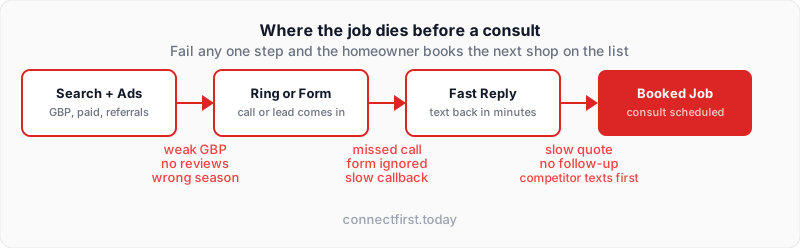
You can fix one problem and still lose jobs if another layer is broken. A strong GBP with a phone that rolls to voicemail still bleeds leads. Fast text-back on missed calls with zero spring marketing still leaves April and May empty. Awareness (search, ads, referrals), seasonal fit, and speed are stacked filters. The homeowner only has to fail you once to move to the next name on the list.
That's why this post starts with visibility and ends with follow-up. If they never find you, response speed never gets tested. If they find you but you miss the call, the consult never gets scheduled. If they book the consult but the quote sits, you still don't get the job.
Operators often ask which lever to pull first. Honest answer: the one that's currently capped. Strong profile, already answering live most of the day? The bottleneck is probably shoulder-season marketing or quote follow-up. Weak map pack rank? Fixing voicemail doesn't fix discovery. Work the constraint that's actually throttling revenue this month, then re-measure.
In Chicago, the constraint moves with the weather. February is a referral and furnace problem. May is a shoulder-season booking problem. July is a missed-call and capacity problem. September is a maintenance and tune-up conversation again. The shops that win treat those as different campaigns, not one generic "HVAC services" line in the water.
Where to start: audit your GBP this week (photos, categories, service areas, last post date). Pull your call logs for missed and abandoned rings; most operators underestimate the number. Script one text for missed calls and one for web forms, even if you send them manually at first. Pick one neighborhood for a focused spring or fall touch. Small moves beat a perfect plan that never ships. You don't need to fix all eight gaps by Friday. Starve the biggest leak first, then come back to the next one with fresh call data.
Key takeaways
- Chicago HVAC is crowded; visibility in local search is the first gate. GBP work is not optional.
- Paid and organic both play a role; balance matters more than picking one (see the budget math).
- Referrals alone won't smooth shoulder season; slow-season and spring playbooks exist for a reason.
- Shoulder season marketing (Chicago spring guide) keeps you off the revenue roller coaster.
- Seasonal offers should match Chicago housing stock and weather (first hot week, steam and hydronic reality).
- Missed calls and slow response lose jobs before a consult: run your loss estimate, then fix the gap with fast text-back.
- Form leads need sub-five-minute replies (lead follow-up).
- Quote follow-up is its own funnel: templates here.
ConnectFirst is missed-call text-back automation for small HVAC businesses. When a call goes unanswered, ConnectFirst texts the caller back in about 30 seconds from your existing business number. Learn more at connectfirst.today.