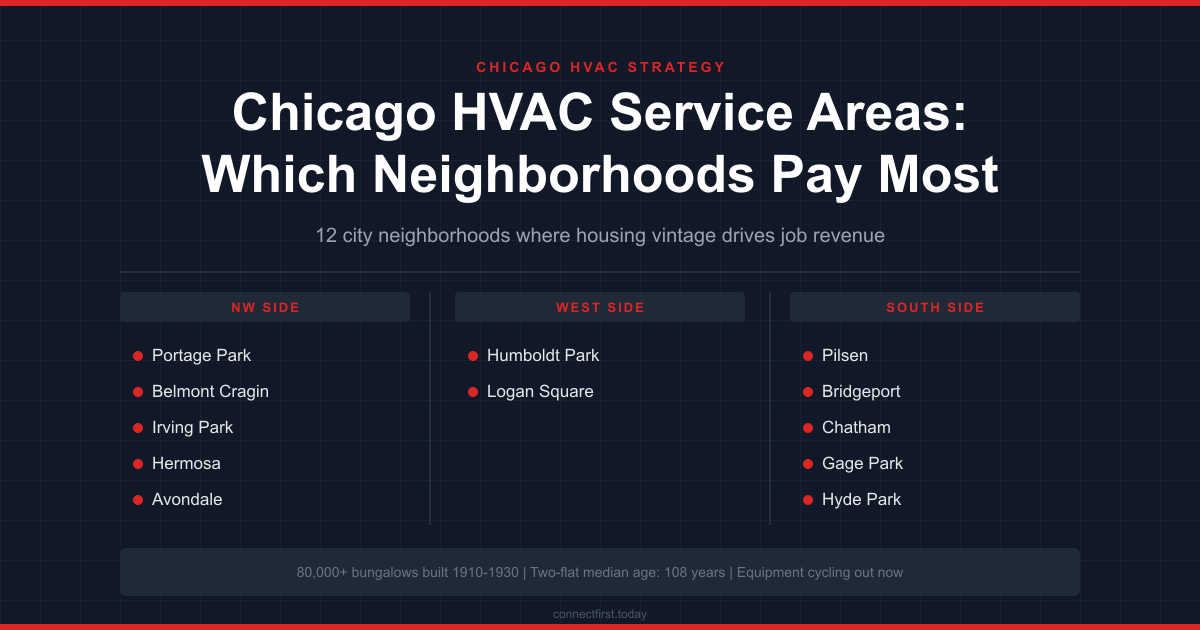
Chicago HVAC Service Areas: Which Neighborhoods Pay Most
Most HVAC shops in Chicago chase leads wherever they can get them. Some assume rich zip codes mean better jobs. Neither is exactly wrong, but both leave money on the table. The neighborhoods that generate the most revenue per call aren't the priciest ones. They're the densest ones: old housing stock, aging equipment, homeowners who pick up the phone themselves. Here's which neighborhoods those are and how to set up your service area to capture them.
Quick Summary
- • Chicago has 80,000+ bungalows built 1910–1930, most with HVAC equipment that's overdue for replacement
- • Older homes cost 10–15% more to service and frequently need full duct upgrades (+$2,000–$5,000)
- • 12 city neighborhoods where job revenue per call consistently beats the suburbs
- • GBP service areas: use specific ZIP codes (up to 20), not just "Chicago, IL"
- • NextDoor campaigns targeting single neighborhoods start at ~$75 and convert on social trust, not just search intent
Table of Contents
- 1. The wrong assumption about Chicago HVAC territories
- 2. Why old city neighborhoods generate more revenue per job
- 3. The 12 Chicago neighborhoods worth building your service area around
- 4. How to set up your Chicago HVAC service areas (channel by channel)
- 5. The missed call math in high-value neighborhoods
The Wrong Assumption About Chicago HVAC Territories
The instinct most shops follow is: go where the money is. Higher home values, better clients. And Lincoln Park or the Gold Coast sounds like it fits that description.
But here's what those neighborhoods actually look like for a 1–5 truck HVAC shop: Four Seasons Heating and a dozen other well-funded operations already own the map pack. Condo buildings in River North have facilities managers on retainer. Newer construction in the high-income zip codes means equipment still under warranty.
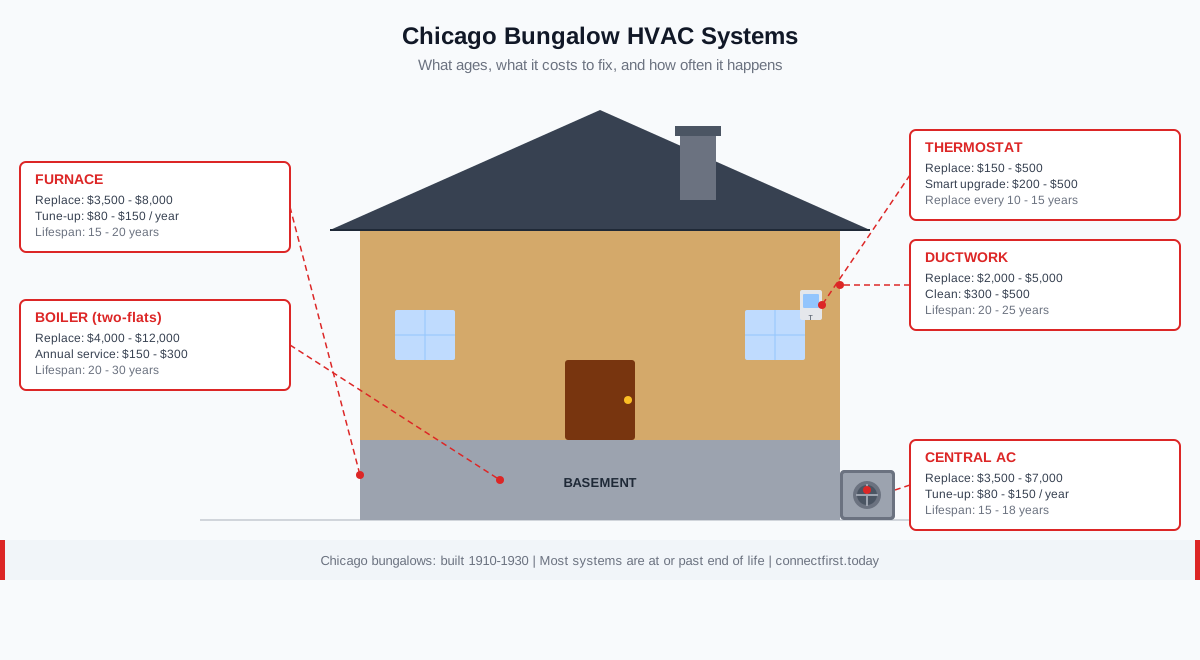
Think the $5,000 boiler swaps, the $3,500 duct replacements, the aging forced-air systems nobody has touched in 20 years. Those jobs are sitting in dense residential neighborhoods where the housing was built in 1920 and the owners pick up the phone themselves.
Housing vintage, not home price, predicts HVAC job revenue. I'd argue that's the most useful frame a Chicago HVAC shop can have when deciding where to spend marketing money. And it points to a very specific set of neighborhoods. If you want to know why shops lose those jobs in the first place, this breakdown of 8 pre-consult failure points for Chicago HVAC shops is worth reading first.
Why Old City Neighborhoods Generate More Revenue Per Job
Chicago's housing stock is old in a way most American cities aren't. The city has more than 80,000 bungalows, built between 1910 and 1930, forming a belt that arcs 4 to 7 miles from downtown. The two-flats and greystones scattered across the West and South sides have a median age of 108 years.
That housing stock needs HVAC work constantly. And it pays better than newer homes for a few concrete reasons:
The jobs run bigger. Older Chicago homes cost 10–15% more to service than comparable newer homes: inferior insulation, older windows, and undersized original ductwork all push up the ticket. Equipment over 10 years old can add 25–50% to a job via specialty parts and labor time. Full duct system replacements, which are common in bungalows and two-flats, add $2,000–$5,000 to what would otherwise be a straightforward furnace swap. Boiler replacements in greystone buildings run $4,000 to $12,000.
Service calls beat installs on margin. Service call margins run 35–50% vs. 18–28% for installs. Old-stock neighborhoods are full of aging systems generating steady service calls year after year. That's the business that compounds, not one-and-done new construction warranty work.
Density is free advertising. A wrapped truck parked in a bungalow block driveway during a job is visible to 20 neighbors. Do good work in a tight neighborhood, and the referrals start coming without any ad spend.
The 12 Chicago Neighborhoods Worth Building Your Service Area Around
These aren't the only neighborhoods worth serving. But for a shop looking to build density in old-stock residential territory, these 12 offer the best combination of housing vintage, owner-occupancy, and manageable competition.
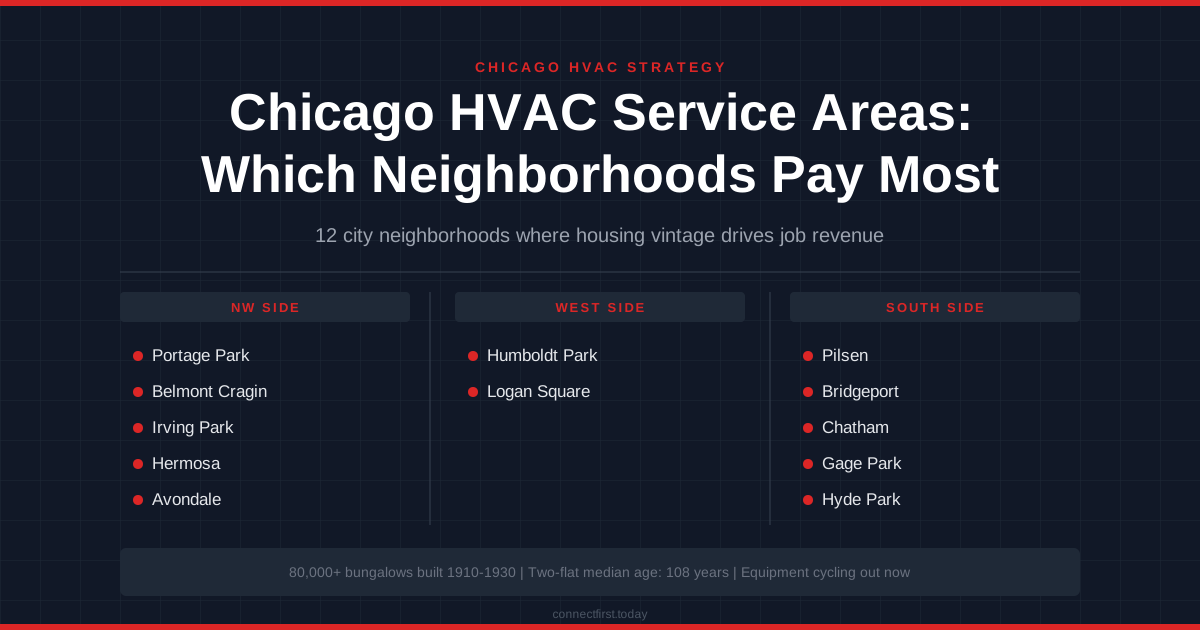
Northwest Side: Portage Park, Hermosa, Avondale, Belmont Cragin, Irving Park
Portage Park is the heart of the Bungalow Belt. The Portage Park historic bungalow district has 225 brick bungalows built 1915–1930. Dense, owner-occupied, working-class: homeowners here call you themselves, no building manager standing between you and the job. Forced-air furnaces dominate. Equipment cycles out constantly, and high-end competition is lighter here than on the North Side.
Hermosa sits immediately south of Portage Park with similar bungalow and two-flat stock, slightly lower home values, and even less competition on the map pack. A shop that dominates Hermosa on Google gets a relatively clear field.
Avondale mixes brick bungalows with two-flats and is gentrifying steadily. New homeowners buying into old buildings hit HVAC problems fast: systems nobody serviced for years, ductwork in poor shape, no central AC in homes that never had it. They research contractors and read reviews. Your GBP rating matters here.
Belmont Cragin is one of the densest bungalow neighborhoods in the city. High owner-occupancy, aging housing stock throughout, and competition on Google that's noticeably lighter than Portage Park because fewer shops specifically target it. Job density is similar, though.
Irving Park runs a mix of bungalows and larger brick two-flats. A solid mid-density territory: enough jobs to keep a truck busy without fighting four other shops for every call.
West Side: Humboldt Park, Logan Square
Humboldt Park has large greystone two-flats and three-flats built in the early 1900s, many with boiler and radiator systems that are 40–60 years old. That's replacement job territory. Heating calls spike hard here in November and December. Competition is lower than in Logan Square because fewer premium shops target this zip code, so a well-set-up GBP profile stands out.
Logan Square has dense bungalow and two-flat stock and has been gentrifying for a decade. Buyers moving into old buildings inherit HVAC problems immediately: boiler failures, conversions from radiator to forced-air that were done badly, no AC in buildings that need it. New buyers here research contractors carefully and read reviews. Get a few 5-star jobs done and the referrals follow.
South Side: Pilsen, Bridgeport, Chatham, Gage Park, Hyde Park
Pilsen is dense two-flats and cottages, most built before 1940. Mixed boiler and forced-air, with a strong word-of-mouth culture. Do great work here and the neighborhood talks. A significant portion of households are Spanish-speaking; if you or a tech speaks Spanish, that's a real competitive edge that most shops aren't offering.
Bridgeport is one of Chicago's classic working-class neighborhoods, with 1920s–1940s bungalows and brick two-flats and high owner-occupancy. Multi-generational households, owners who don't change contractors often. Get the job right once and you've got a customer for years.
Chatham on the South Side is solidly bungalow-belt territory: brick single-families and two-flats from the 1920s and 1930s, strong owner-occupancy, and equipment that's well past its expected life. Less competition from established HVAC shops than anywhere on the North Side.
Gage Park runs similar housing stock to Chatham and Bridgeport, dense bungalows and two-flats from the 1920s. High-need territory that doesn't get much targeted HVAC marketing attention. If you're looking for neighborhoods where you can establish a presence without fighting hard for map pack position, Gage Park is worth adding.
Hyde Park is more mixed: courtyard apartments, greystone buildings, 1950s–1960s mid-rises near the University of Chicago, and older single-family homes. Boiler systems are common in the courtyard buildings. The U of C stabilizes demand year-round. Moderate competition; a shop with 15+ Google reviews has a clear advantage.
How to Set Up Your Chicago HVAC Service Areas
Knowing which neighborhoods to target is step one. Actually showing up there, in Google Business Profile, Google Ads, and NextDoor, is step two.
Google Business Profile: ZIP Codes, Not Just "Chicago, IL"
Most HVAC shops add "Chicago, Illinois" as their single service area entry and wonder why they don't appear in Pilsen or Chatham searches. GBP allows up to 20 service area entries, and specific ZIP codes consistently outperform city-name entries for neighborhood-level map pack visibility. Google's own documentation confirms you can add neighborhoods, ZIP codes, cities, or counties.
Here's the setup: Google Business Profile → Edit Profile → Service areas → Add each ZIP code.
Key ZIP codes for the 12 neighborhoods:
| Neighborhood | ZIP Code(s) |
|---|---|
| Portage Park | 60641 |
| Hermosa | 60639 |
| Avondale | 60618 |
| Belmont Cragin | 60639 |
| Irving Park | 60618, 60641 |
| Humboldt Park | 60647, 60651 |
| Logan Square | 60647 |
| Pilsen | 60608 |
| Bridgeport | 60609 |
| Chatham | 60619 |
| Gage Park | 60629 |
| Hyde Park | 60615 |
Save, then give Google 48–72 hours to reflect the changes. This doesn't guarantee map pack placement. Reviews, proximity, and overall profile health all factor in. But without the right ZIP codes, you're invisible in neighborhood-specific searches. For the full GBP optimization playbook, this guide covers everything beyond service areas.
Google Ads: Neighborhood Keywords, Not "HVAC Chicago"
Two options worth understanding for city-proper targeting:
Search Ads with ZIP code targeting: Set your campaign location to the specific ZIP codes above. Then write ad headlines that name the neighborhood. "Furnace Repair in Portage Park" converts at roughly three times the rate of "HVAC Chicago" because search intent is higher and the competition is lighter. Add negative location targets for ZIP codes you're not covering.
Google Local Services Ads: Pay-per-lead, shows the "Google Guaranteed" badge, a high-trust signal in residential neighborhoods where homeowners are skeptical of who they let in. You control which ZIP codes you want leads from and can pause areas where cost-per-lead runs too high. For most Chicago city-proper shops, LSAs outperform standard search ads on conversion rate. For a full breakdown of how to split budget between paid and organic, this post on the $500/month HVAC marketing decision covers the tradeoffs.
NextDoor: The Channel Most Shops Ignore
NextDoor advertising lets you pick the exact Chicago neighborhoods your ad appears in. For HVAC shops running in the bungalow belt, it's worth testing before you spend $1,000/month on Google Ads.
How it works: Create a free Business Page, then run a Local Deal. Choose which neighborhoods see it, write a short offer (something like "Furnace tune-up special for Portage Park homeowners before heating season"), and set a budget. Local Deals start around $75. Real photos of your crew or a recent job get 13% higher engagement than stock images. The ACHR News covered this channel specifically for HVAC contractors. It's not a gimmick.
After you finish a job, post it: "Just wrapped up a boiler replacement on Kildare Ave in Portage Park. If your system is 15+ years old, happy to take a look this week." One recommendation from a satisfied neighbor can generate three to five more inquiries on that block. That's the mechanism that makes dense old-stock neighborhoods so valuable: word travels fast.
The Missed Call Math in High-Value Neighborhoods
One missed call from a Portage Park homeowner with a 30-year-old boiler could be a $7,000 replacement job. From a Chatham bungalow with a failing furnace and compromised ductwork, it could be more. The cost of not texting back immediately isn't abstract. It's that specific job going to whoever responded first. If you want the exact workflow and message timing, this missed-call text-back playbook for HVAC shops breaks it down step by step.
ConnectFirst texts missed callers back within 30 seconds from your existing business number. No new app, no new phone line. It takes about 20 minutes to set up. When your truck is on the Northwest Side and a call comes in from Gage Park, it doesn't go to voicemail and disappear. It gets a text back automatically, keeps the lead warm, and gives you the chance to book it when you surface.
That's why getting your service area right matters. Once you're in the right neighborhoods, you can't afford to miss the calls. If you want to quantify the downside for your own numbers, run it through the missed call cost calculator.
Key Takeaways
- Housing vintage, not home price, predicts HVAC job revenue. A 1920s Bridgeport bungalow beats a 2010 condo in most of the North Side every time.
- Chicago's 12 highest-value HVAC city neighborhoods span the Northwest, West, and South sides. All are dense and owner-occupied, with equipment well past its expected life.
- Add specific ZIP codes to your GBP service areas (up to 20). "Chicago, IL" alone doesn't get you neighborhood-level map pack visibility.
- Neighborhood-specific Google Ads keywords convert roughly 3× better than city-wide terms. "Furnace repair Logan Square" beats "HVAC Chicago."
- NextDoor Local Deals start at ~$75 and let you target a single neighborhood. Post after local jobs for the social proof that converts neighbors.
- Dense residential blocks mean truck visibility equals free advertising to 20+ neighbors per job.
- Missing a call in a high-value neighborhood isn't a $0 loss. It's potentially a $5,000–$10,000 job that went to whoever texted back first.
Written by ConnectFirst
ConnectFirst helps small HVAC shops stop losing jobs to missed calls. When a call goes unanswered, ConnectFirst texts the caller back within 30 seconds from your business number, keeping the lead warm while you're on the job. Setup takes about 20 minutes. See how it works →