A homeowner fills out your contact form at 2pm on a Tuesday. By 5pm, they've hired one of your competitors. Not because the competitor's price was better. Because they replied first.
This happens all the time with HVAC lead follow-up, and most operators have no idea it's happening. The form lead goes quiet, so they assume the person wasn't serious or found another way. Usually that's not what happened. The follow-up just came too late.
According to data from Use Hatch's analysis of over 132,000 HVAC campaigns, 88% of HVAC companies take more than 5 minutes to respond to an inbound lead. And 78% of customers book with the first company that responds. That gap is where jobs go.
This post breaks down why form leads die fast, what's broken in the typical small-shop process, and gives you a workflow plus text templates to fix it.
The short version
- 88% of HVAC companies take 5+ minutes to respond to a web lead
- 78% of homeowners book with whoever replies first
- Form leads go cold faster than missed calls — the homeowner filled it out and moved on
- A text in under 5 minutes beats a phone call an hour later
- You can automate the first reply so it goes out before you've even looked at your phone
In this post
Why Form Leads Go Cold So Fast
A missed phone call creates urgency on both sides. The homeowner knows they tried to reach you. You know someone called. There's a record of it, and the social contract says you call back.
A contact form doesn't work like that.
The homeowner submits the form and goes back to whatever they were doing. They're not sitting by the phone. They don't have a specific expectation about when you'll reply. That passivity is what kills the lead.
Within minutes of submitting, inertia sets in. They scroll Instagram. They see an ad for a different HVAC company. They Google "AC repair near me" again and call someone who answers. It's not that they changed their mind about you. They just stopped actively waiting.
I've seen homeowners describe this experience on Reddit and home improvement forums: "I filled out the form, didn't hear back for a day, so I just called someone else." No hard feelings. They just moved on. And your form lead became someone else's booked job.
The fix is simple. But you have to treat form leads differently than missed calls — the window is much shorter than most operators expect.
What the 5-Minute Window Actually Means for HVAC
Five minutes sounds fast. For most HVAC shops, hitting that speed to lead is nearly impossible without some kind of automation.
Use Hatch's analysis of HVAC-specific campaign data found that 88% of HVAC companies take more than 5 minutes to respond to inbound leads. The best-performing shops in their data had response rates around 90%. The worst were under 9%. Most fell somewhere in the middle.
The broader data isn't any better. Leads contacted within 5 minutes are 21 times more likely to convert than those contacted after 30 minutes. The industry average response time across all businesses is 42 to 47 hours. And only 27% of web leads are ever contacted at all.
That last number is the one that should bother you. Nearly three-quarters of web leads go completely unanswered.
The lead response time problem gets worse during peak season. You're on jobs from 7am to 6pm. Your phone rings constantly. A form submission hits your email at 10am, and you don't see it until you're writing up the invoice at the end of the day. By then, that homeowner has been without AC for eight hours and already has someone scheduled.
What "First to Respond" Actually Means
It doesn't mean first to have a full conversation. It means first to make real contact — a reply the homeowner actually receives and reads.
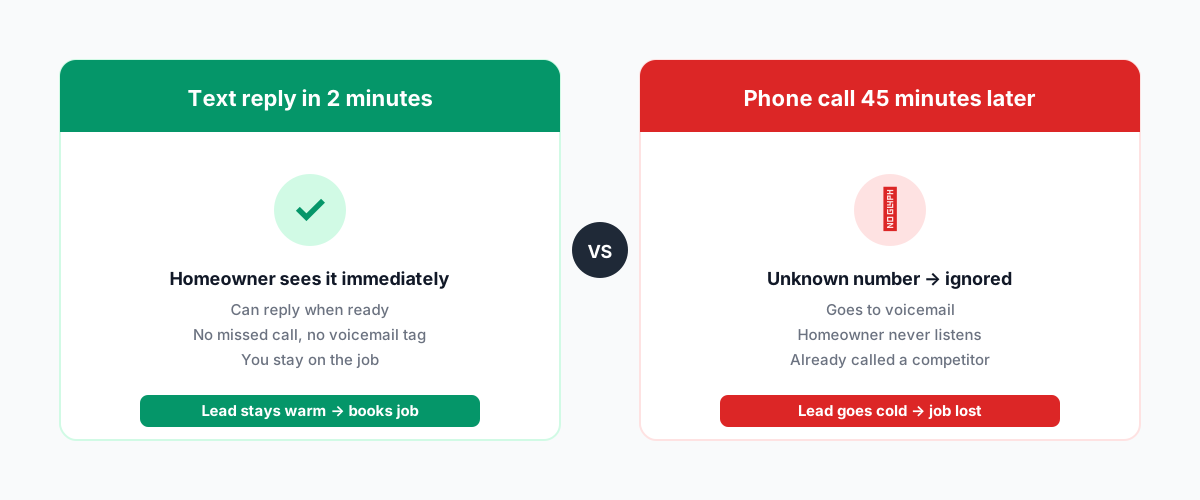
A text that arrives 2 minutes after they submit the form beats a phone call 45 minutes later, even if the phone call is more informative. The homeowner already knows you're on it. Their urgency is managed. You've bought yourself time to finish the job and call them properly.
What Your Follow-Up Process Looks Like Right Now
Here's the typical small-shop flow. Tell me if this sounds familiar.
Form gets submitted. It goes to your email. Your email sends a notification to your phone, but you've got notifications muted because your phone blows up all day. You check email at lunch or between jobs. You see the form, plan to reply, get pulled to the next thing. You reply that evening or the next morning with a professional, friendly message that never gets a response.
The lead is gone. But the email you sent looks fine, so you assume they just weren't serious.
There are two places this consistently breaks down. The first is notification: the form goes to email, and email doesn't feel urgent. A text buzzing your phone feels urgent. A new email in an inbox you check three times a day does not. The second is readiness: even when you do see the form, you're writing a reply from scratch while standing next to a unit in someone's attic. That's how you get vague replies sent an hour later that never get a response.
Envision Up ran an experiment where they secretly tested 13 HVAC companies by submitting a quote request to each one. The response times ranged from same-day to 4 or more days. Most were slow. A few never replied at all.
For context on the missed-call side of this problem — which is a separate but related issue — see how auto text-back works for missed HVAC calls. Form leads and missed calls are the two biggest places leads leak out of a small shop.
HVAC Lead Follow-Up Workflow: What to Do in the First 5 Minutes
No CRM required. No sales team. Just a repeatable process you can run from your phone.
Here's what that looks like:
-
Get form notifications to your phone as a text, not an email. Most contact form tools — Gravity Forms, WPForms, Google's built-in forms — let you forward submissions to an email address. Set that email to forward to your phone as an SMS, or use something like Zapier to route submissions straight to a text message. Goal: form comes in, phone buzzes within a minute.
-
Reply by text within 5 minutes. Not a phone call. A text. Calls go to voicemail when someone's in the middle of something. A text shows up on their screen and they can reply when they have a second. Keep it short.
-
Follow up with a call within the hour. Once you're off the job or at a break, call them. They already know you're on it, so you're not a stranger calling out of nowhere.
-
One more text if no reply after a few hours. Keep it brief: "Just following up on my message from earlier, happy to answer any questions." Don't over-apologize. One follow-up is enough.
-
Short call or text the next morning if still nothing. After that, let it go unless they reach back out.
Why Text Beats Phone for the First Reply
Cold-calling someone who submitted a form isn't the same as calling back someone who rang you. They submitted the form and moved on. If you call and they're busy, you're interrupting them. They don't pick up, you leave a voicemail, and now you're waiting for them to call you back.
Text flips this. They can reply when they're ready. And a reply is almost always faster than a callback. Once the conversation is going over text, scheduling a call is easy.
For what comes after first contact, the 48-hour HVAC quote follow-up sequence covers how to move from interested to booked.
Copy-Paste Text Templates for Your First Reply
Send these within the first 5 minutes of getting a form submission. They're short on purpose. A long first text reads like a sales pitch. A short one reads like a person.
Template 1 — General service request:
Hi [Name], got your message about [service]. I'll give you a call shortly to get the details sorted. Feel free to text back here if anything's urgent. — [Your name], [Company name]
Template 2 — AC or heat emergency:
Hi [Name], saw your message. Sounds like you need someone out quickly. I'm wrapping up a job and can reach you in about [X] minutes. Is this urgent? — [Your name]
Template 3 — Quote request:
Hi [Name], thanks for reaching out about a quote. I'll call this afternoon to get the details. What time works best for a quick call? — [Your name], [Company name]
A few things NOT to include in a first reply:
- No pricing. First text isn't the place. They don't have enough context, and neither do you.
- No long paragraphs. If it takes more than 5 seconds to read, it's too long.
- No vague timing. "We'll be in touch soon" means nothing. Give them a specific window: "within the hour," "this afternoon," "by end of day."
- No boilerplate footer with your logo, license number, and three social media links. It reads like a form letter and kills the human feel immediately.
The goal of the first text is simple: confirm you got their message and give them a specific next step. That's it. The actual conversation happens on the phone.
How to Make the First Response Automatic
The workflow above works. But it relies on you or someone on your team remembering to check for new form submissions and send that first text within 5 minutes.
That's hard to do consistently when you're on a job.
The better version: hook your contact form to an SMS auto-responder so every new submission gets a text in under a minute, automatically, from your business number. The homeowner hears from you before they've had time to pull up Google and call someone else. No manual check, no remembering.
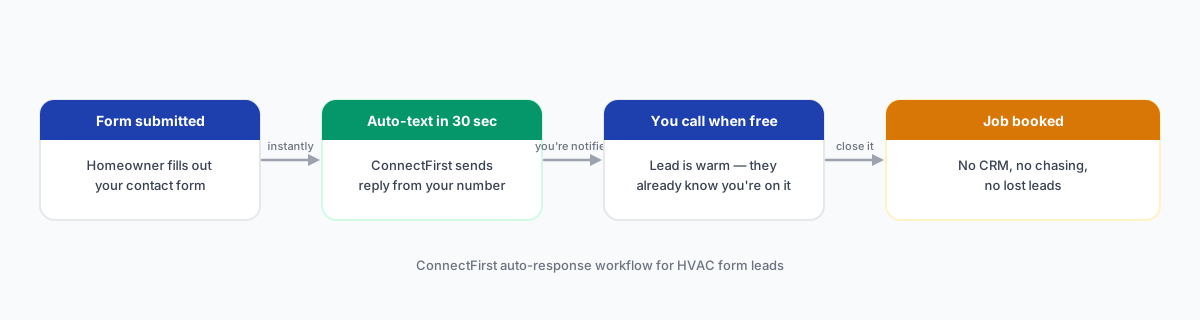
This is what ConnectFirst does for HVAC shops. When a prospect contacts you through your website, ConnectFirst sends an automatic text back within 30 seconds from your existing number. You get notified of the lead, and you follow up with a call when you're free. The homeowner already knows you're on it.
Setup takes about 20 minutes. There's no new app to check, no new number to advertise, and no contract. It's $99/month.
If form leads are going quiet before you get a chance to reply, fill out the contact form and tell us about your shop. We'll review your setup and show you the best way to automate first response.
Key Takeaways
- 88% of HVAC companies take more than 5 minutes to respond to a web form lead. Most take hours. Some never reply.
- 78% of customers book with whoever responds first. Second place on a form lead is usually last place.
- Form leads go cold faster than missed calls. The homeowner filled it out and moved on. They're not waiting.
- Text first, then call. A reply in 2 minutes beats a phone call 45 minutes later, even if the call is more thorough.
- You don't need a CRM. Get form notifications as texts, keep a template ready, send one follow-up if no reply. That's the system.
- If you're on a job when the form comes in, automation handles the first reply. The homeowner hears from you in seconds regardless.
Written by the ConnectFirst team. We build automated text messaging for small HVAC businesses — 1 to 5 trucks.